

How to Replace Your Refrigerator Water Filter: Step-by-Step Guide
Replacing your refrigerator filter is crucial for keeping your water tasting great, reducing sediments , and maintaining consistent performance. Below, you’ll find why the filter matters, how to identify the correct replacement, and straightforward instructions for how to change refrigerator filter components safely and efficiently.
Why Your Refrigerator Water Filter Matters
Your refrigerator’s water filter reduces sediments commonly found in tap water and helps protect the appliance’s internal systems. Regular replacement keeps water and ice tasting fresh. If you’re learning how to replace a refrigerator water filter, understanding these benefits will help you prioritize timely maintenance.
Benefits of timely filter replacement:
- Improved taste and odor: Reduces chlorine and unpleasant smells for more enjoyable drinking water.
- Cleaner water: Helps lower particulates, sediment, and select metals for clearer results.
- Appliance protection: Limits sediment that can contribute to scale and wear inside the system.
- Better ice quality: Produces clear, better-tasting ice that enhances beverages and recipes.
How filtration improves water quality:
- Activated carbon media helps capture chlorine and organic compounds that affect flavor and odor.
- Fine filtration traps particles and sediment that can cloud water or ice.
Signs it’s time to replace the filter:
- The refrigerator’s filter indicator light turns on.
- Approximately six months have passed since the last replacement.
Delaying replacement may cause:
- Water or ice tastes different or has an unusual smell.
- Dispensing slows or water flow becomes weak.
- Ice appears cloudy or forms more slowly than usual.
How to Identify Your Refrigerator Filter
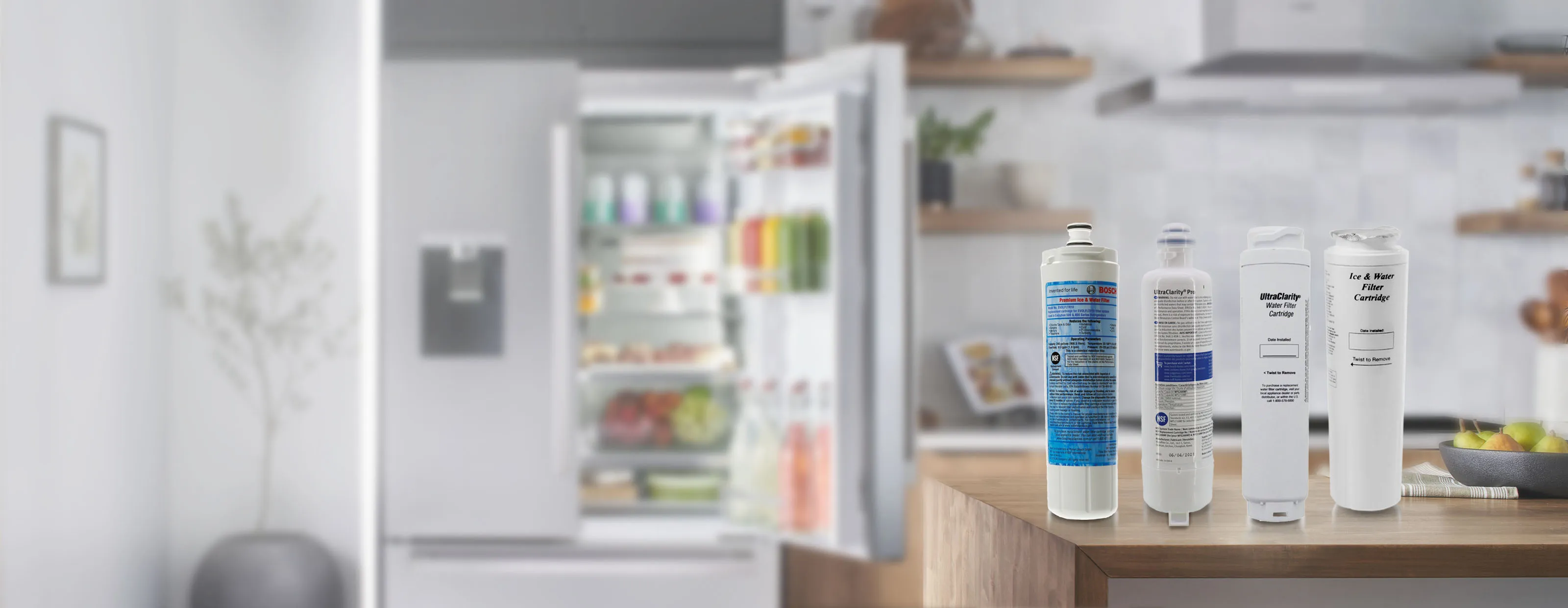
Knowing your filter type ensures you purchase the correct replacement. Most refrigerators use either twist-in (turn-to-lock) or push-in (snap-fit) cartridges. Some models use inline external filters installed on the water supply line behind the refrigerator.
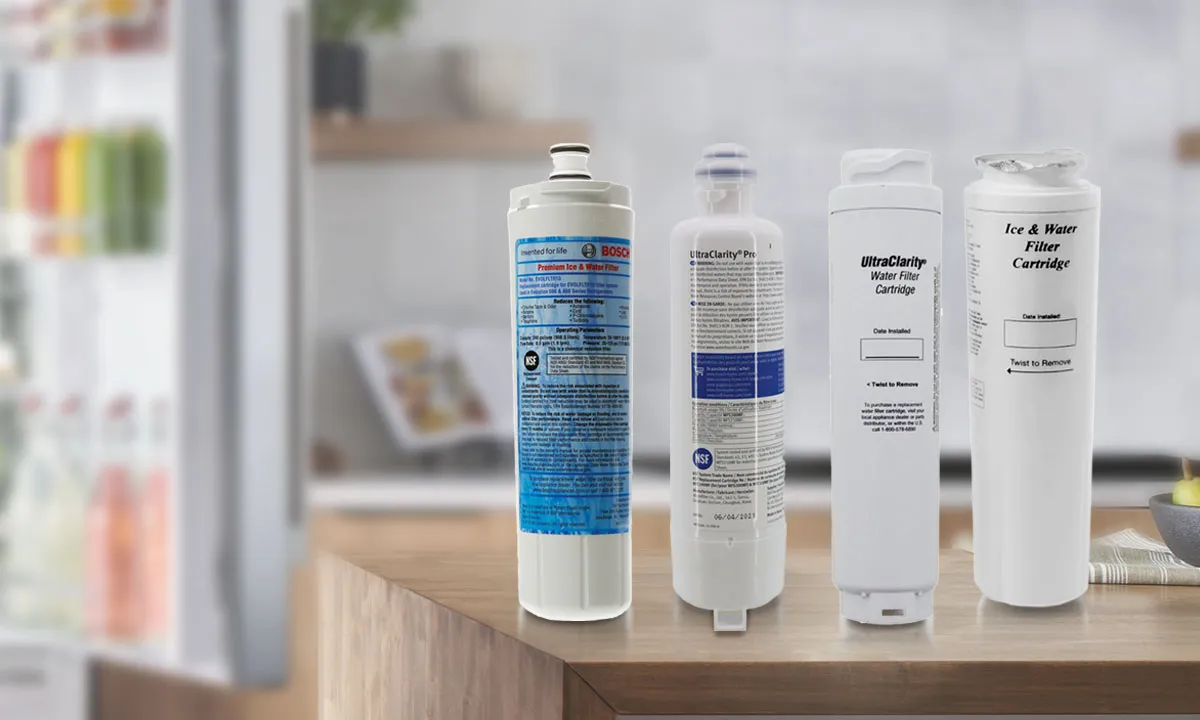
Common filter types:
- Twist-in filters: Often in the upper-right interior corner or base grille; secured with a quarter turn.
- Push-in filters: Typically behind a small door inside the fridge compartment; click into place.
- Inline filters: External cartridges on the water supply line; more common in older installations or specific setups.
Don’t know which water filter to use with your Bosch refrigerator? Visit our filter finder below where you can search by entering your refrigerator model number.
Ready to purchase? Shop Bosch water filters below.
Step-by-Step Instructions: How to Replace a Refrigerator Filter
With the right preparation, learning how to replace a refrigerator filter is straightforward. Always consult your owner manual for model-specific guidance and safety notes. Whether you’re exploring how to replace refrigerator water filter steps or how to change fridge filter methods, the process below will help you complete the job with confidence.
What you’ll need:
- A replacement filter compatible with your refrigerator
- A small towel to catch drips
- A container for flushing water (if recommended)
General steps to remove and install the new filter:
- Stop dispensing: Ensure you’re not actively dispensing water when starting. Most refrigerators do not require shutting off the household water supply for filter changes; verify in your manual.
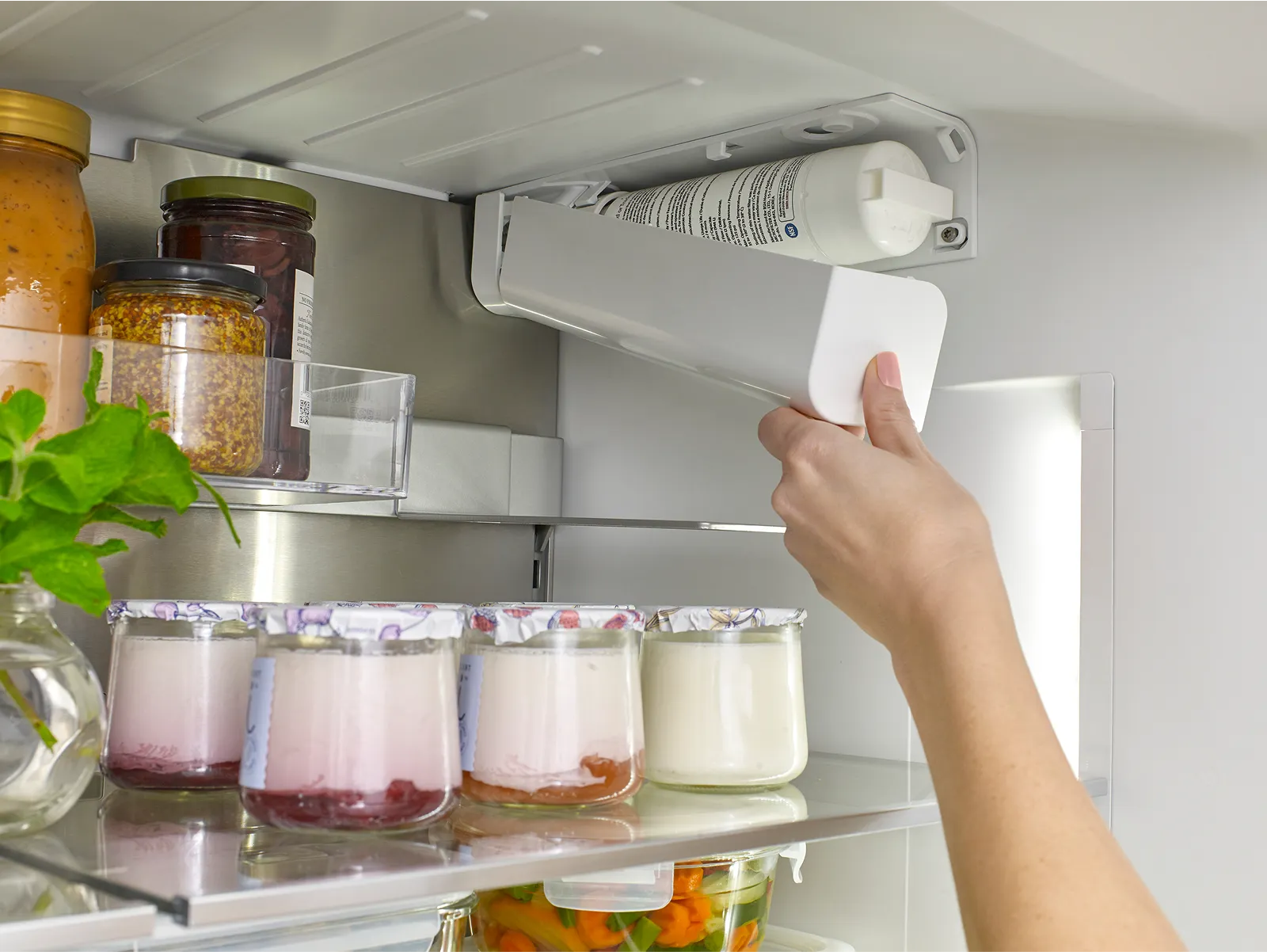
- Open the filter compartment: Locate the housing inside the refrigerator or in the base grille.
- Remove the old filter: Follow the twist-in or push-in instructions below.
- Inspect the housing: Check for debris or moisture and wipe the area dry.
- Prepare the new filter: Remove protective caps or seals and confirm O-rings are seated and undamaged.
- Install the new filter: Insert and secure according to your filter type until it locks firmly.
- Flush the system: Dispense and discard 2–3 gallons of water (or the amount specified by your manufacturer) to clear air and activate the filter media.
- Reset the filter indicator: Use the control panel or follow your manual’s reset procedure.
- Check for leaks: Observe the housing and dispenser for drips and gently tighten or adjust if needed.
For visual instructions, check out our handy water filter video below.
Twist-in filter replacement:
- Locate the twist-in cartridge (commonly upper-right interior or base grille).
- Turn the old filter counterclockwise until it releases; some designs pull straight out after a partial turn.
- Align the new filter’s tabs or arrow with the housing. Insert and turn clockwise until it stops firmly; avoid over-tightening.
- Wipe away any drips and confirm the filter sits flush.
Proper Disposal
- Do not place used filters in curbside recycling; most contain mixed materials.
- Dispose of the filter in regular household trash unless local regulations specify otherwise.
- If available, consider a retailer or community take-back program for responsible disposal.
Important guidance:
- Replace the filter about every six months.
- Use filters approved for your refrigerator model to maintain performance, proper sealing, and safety. Visit our filter finder below where you can search by entering your refrigerator model number.